











.png)




In bustling commercial settings, where fire doors may be operated 100’s to 1000’s of times each working day, door hardware can become aged and damaged, risking the integrity of the building’s fire safety. Approached professionally, a retrofit project can make a considerable difference to a building’s operation while consciously improving its environmental footprint.
When it comes to fire door hardware, an effective retrofit project can safeguard the quality of your commercial building, making improvements to cost, fire safety and functionality. However, replacing door hardware with unsuitable, low-cost, low-quality substitutes can further risk the integrity of your building’s fire doors and the safety of occupants within.
Retrofitting with a sub-standard door component may result in:
- A fire door not performing as intended or as it did when it was originally fire tested;
- A breach of Regulatory Reform (Fire Safety) Order; and/or
- A rise in additional costs - associated with replacing the upgraded component that performs worse than the original hardware
Here’s how we recommend approaching a retrofit project:
1. Identify the problem: Understand why your hardware needs replacing. Is it damaged? Or perhaps unsuitable in its setting? Your replacement hardware needs to act as a solution, so it’s key to recognise the problem and how your replacement hardware will solve it.
2. Professional specification: When it comes to selecting new hardware, your decisions must be well informed. Recognise the weight of your choices and ensure your selected replacement is of high quality, durable and suitable for application.
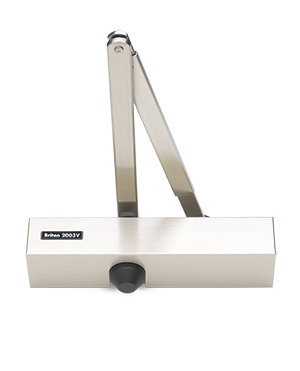
3. Precise installation: In accordance with BS EN 1154, your new product must be fitted to the manufacturer’s instructions and not just the existing fixing positions. For example, fitting to the same plane as the closing device will prevent the door leaf from warping.
4. Follow the Golden Thread: Throughout your project, refer to the Code for Construction Product Information (CCPI) for clear, accurate and up-to-date product information. Your selected door hardware must conform to UKCA and CE certifications and the associated declaration of Performance (DOPs) to show the product conforms to the correct standards.
If you have any doubt or are uncertain about retrofitting, speak to one of our experts for assistance.


