










.png)




Correct specification, expert installation and routine maintenance are all prerequisites of fire door safety. These principles are well established and regulated within passive fire protection schemes, and on paper, help to demonstrate that a fire door assembly is capable of performing as intended in an emergency. However, in modern building environments there are additional factors to consider.
In reality, a fire door’s effectiveness can quickly be undermined by seemingly minor everyday actions. To some users, briefly propping open a fire door, placing an object in its swing path or repeatedly using excessive force to close the door may appear harmless, but each can have an adverse effect on the door’s ability to perform its primary function. And so, for end users and those responsible for life safety, understanding the impact of these everyday behaviours is a crucial step towards maintaining fire door safety.
Why are so many fire doors propped open?
Propped open fire doors remain a familiar sight across the built environment, with new research from the British Woodworking Federation’s Fire Door Safety Week 2026 campaign finding that, alarmingly, 38% of Gen Z feel safe when a fire door is wedged open. Whether wedged open with a doorstop, a chair or an ironically placed fire extinguisher, convenience is often at the heart of the decision. Yet, preventing a fire door from closing comes at a cost.
In truth, a heavy fire door may feel inconvenient to open repeatedly, whilst in some passageways an open door may improve airflow and the movement of people in a high-footfall setting. Nonetheless, fire doors should not be viewed as regular doors. When paired with appropriate, certified hardware, they are strictly designed to restrict the spread of fire and smoke and will compartmentalise a space for a specified period. However, they can only perform this function successfully when closed.
Many fire doors are located in busy entrances, corridors and escape routes, and as such, they may be operated thousands of times over the course of their service life. The repeated use of a door - especially if it is forcefully opened or closed against an obstruction - can accelerate the wear and damage of critical components, potentially affecting the way the door operates. Even in cases where a door must be held open for operational reasons, such as a large, busy hospital environment for example, an appropriate hold-open or automatic release solution must be specified, as opposed to relying on a foreign object or obstruction.
Simple actions, safer buildings
A propped open fire door is not always the result of poor education or behaviour, either. Where a door is routinely wedged open out of convenience, it may indicate that the assembly is not operating correctly and is therefore proving more difficult to open and close than intended.
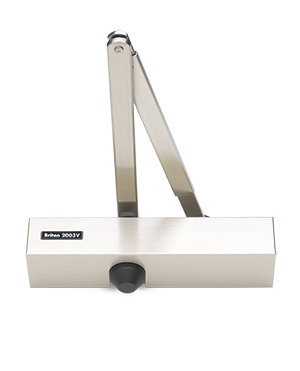
In such a case, occupants must not disconnect, adjust or remove self-closing devices themselves. Instead those responsible for fire safety should investigate the door’s operation, ensuring that hardware is correctly specified for its purpose and the environment in which it is installed. Problems can become more prevalent when door hardware is damaged, with loose hinges, impaired closers or warped doors either going unnoticed or simply dismissed as a cosmetic issue rather than something that may hinder performance. With this, addressing the underlying mechanical issue is far more effective than simply reminding users to keep the door closed.
Improper maintenance can also have unintentional consequences. Residential settings in particular may be subject to another seemingly inconsequential behaviour in the form of repeated decorating, which can actually result in paint or other finishes preventing hinges, closers, locks and seals from operating as designed. Similarly, adding or modifying items on a fire door such as coat hooks, signs or letterboxes without confirming they have been tested or assessed as part of the original assembly, can compromise the fire rating and may invalidate certification.
Fire door safety does not end with responsible persons and professionals then; it is influenced by everyone who uses a building. With that, it’s vital to make safe behaviour both understandable and achievable for those who live, work and spend time in and around a space. In many cases, these simple, but informed decisions can make a significant difference:
- Avoid wedging or propping open fire doors
- Keep doorways and swing paths clear at all times
- Avoid tampering with fire door hardware or removing components
- Avoid using excessive force when opening and closing doors, and report doors that are difficult to operate
- Report visible damage, faults or unusual changes in operation
- Do not add, remove or modify components without professional advice
- When unsure, seek appropriate professional guidance rather than improvising a solution
This collective approach does not require everyone to become an expert. In fact, inspections, repairs and adjustments should always be carried out by suitably competent professionals. However, fire door safety is a shared responsibility, and sometimes protecting lives can come down to the smallest of everyday actions.
The industry faces an ongoing challenge to change the perception surrounding fire doors and must elevate them from being seen as a humble entrance or exit to a specialised piece of life-saving equipment. Because when a fire door is recognised as a critical part of a building’s passive fire protection, and is used as intended, it is better placed to perform effectively when it matters most.


